Comparison
Vidonto vs Synthesia
Synthesia makes AI avatar videos for business training; Vidonto adds an AI presenter to summary videos, edits your recordings and charges credits, not a plan.
Updated
Checked on . Everything said here about Synthesia comes from Synthesia's own public pages on that date, listed under Sources. Products change, so check their site for the latest. Everything about Vidonto was checked against the app.
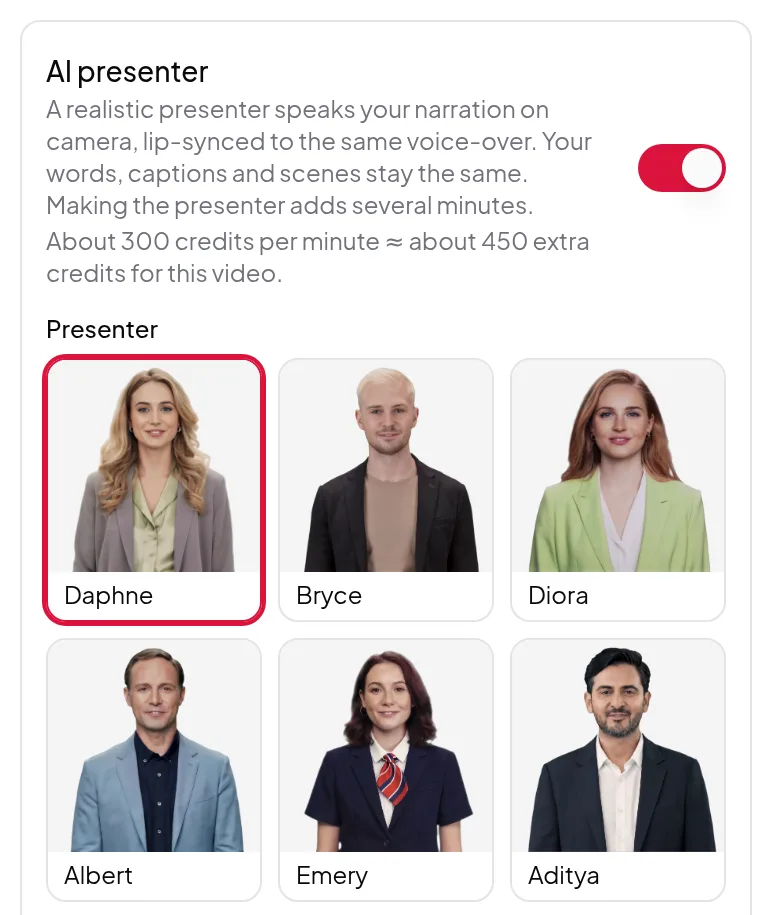
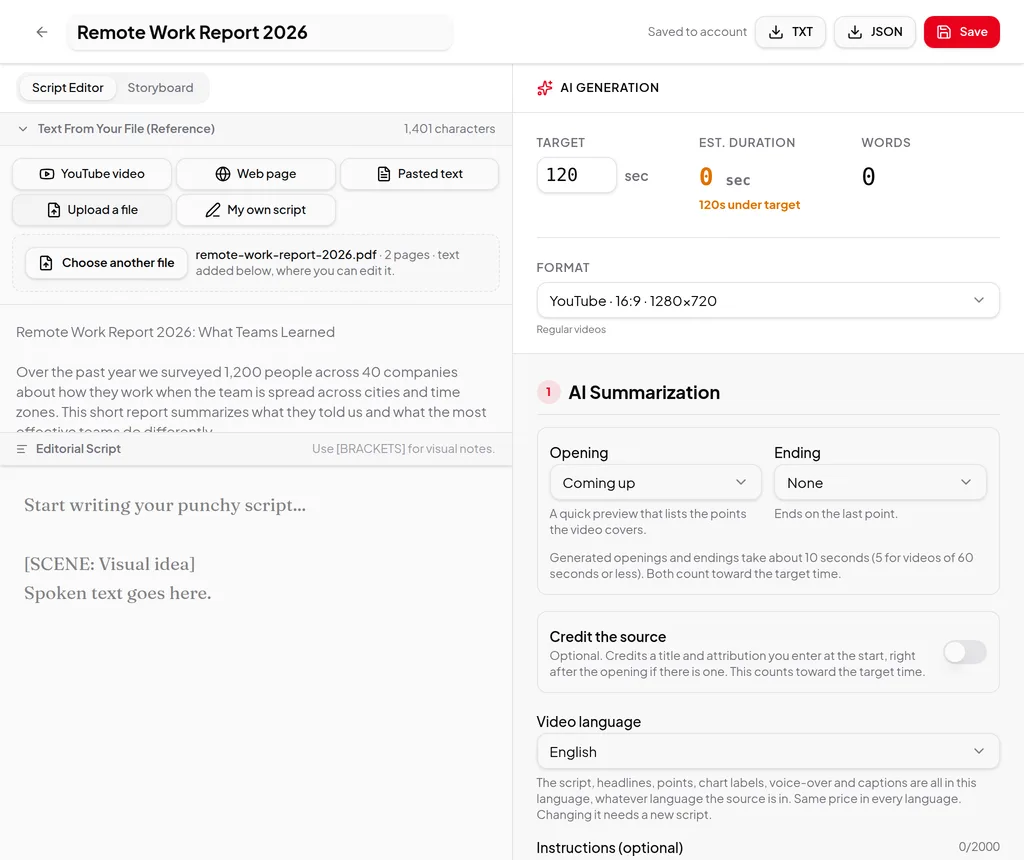
Synthesia and Vidonto can both make a video with a realistic AI presenter and no camera. Vidonto starts from something you already have — a YouTube video, a web page, a document or your own script — writes and storyboards a short narrated video from it that you check before anything is narrated, and can add an AI presenter on top. The same app edits your own recordings, and you pay with credits as you use them instead of a monthly plan. Synthesia is built around AI avatars for business video: training, onboarding and sales, with avatars of yourself, 140+ languages, interactive quizzes and team features.
The short verdict
- Pick Synthesia if you make training or company videos with a team and want an avatar of yourself, a cloned voice, 140+ languages, interactive quizzes and branching, SCORM files for your learning system, or brand kits with fonts.
- Pick Vidonto if your videos start from a YouTube video, an article or a document, you want to check the script against the source before anything is narrated, you also edit your own recordings, and you’d rather pay as you go than keep a monthly plan.
Pay only for what you use
Vidonto has no subscription, no monthly plan and no per-person fee. You buy credits when you need them:
- Packs start at $5 for 1,000 credits. Larger packs include extra credits: 2,100 credits for $10 or 5,500 for $25.
- Purchased credits don’t expire, so there are no monthly credits to use up.
- Editing is free. Editing scripts and storyboards, cutting words in a recording, recording and exporting on your computer never use credits.
- You see the price first. Every paid step shows an estimate in credits before it starts, including the extra cost of the presenter.
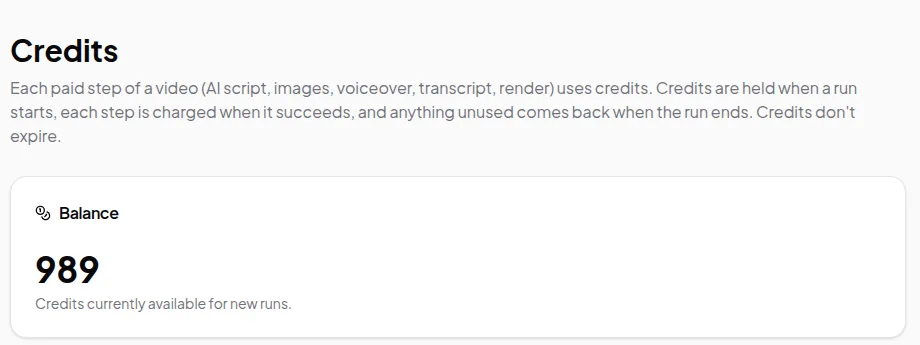
- Failed steps aren’t charged. Credits are held when a run starts, each step is charged only when it succeeds, and anything unused goes back to your balance.
With no monthly fee, you don’t pay in months you don’t make videos. The only ongoing costs are ones you choose: a video you keep in Vidonto’s cloud, and views of a share link. If your team makes avatar videos every week, a plan like Synthesia’s may suit you; if you make videos now and then, credits mean you pay only for those. See how pricing differs and the pricing page.
What Vidonto adds that Synthesia’s pages don’t describe
- Summaries of a YouTube video. Paste a YouTube link and Vidonto reads the video’s captions, writes a short script and renders a narrated video. Synthesia’s pages describe YouTube links for dubbing a video, not for summarizing it.
- Quotes you can check. When a summary quotes a YouTube video, the Studio shows the quotes it used next to the transcript.
- Retakes found for you. When you edit a recording by deleting words, Vidonto suggests retakes — a sentence you stopped and said again — along with filler words and long pauses, for you to accept or reject.
- Camera views and zooms after you record. For screen + camera takes, switch between screen only, a camera bubble, side by side and camera full screen, or zoom in on part of the screen.
- Sound cleanup and short clips. Clean up noisy sound with a strength slider, and get up to 8 suggested short clips from a long recording.
- Words to go with your video. The description writer writes a YouTube title, description and tags, social posts, or a blog post from the words your edit keeps.
- Highlights videos and compilations. A highlights video turns the best moments of one recording into a short video, linked by narrated bridges or text cards, and a compilation turns 2 to 10 of your recordings into one highlight video, with moments suggested by AI for you to order and trim.
Feature by feature
| Vidonto | Synthesia | |
|---|---|---|
| Make a video without filming | Yes: a narrated summary video, with an optional AI presenter | Yes, with AI avatars and voiceovers |
| Start from a document, slides or a link | YouTube links, web pages, PDFs, Word files, PowerPoint decks (text only) and your own script, or up to 5 of them in one video | Docs, PowerPoints and links, through its AI Assistant |
| Summary of a YouTube video | Yes, from its captions | Not described on the pages we checked; YouTube links are described for dubbing |
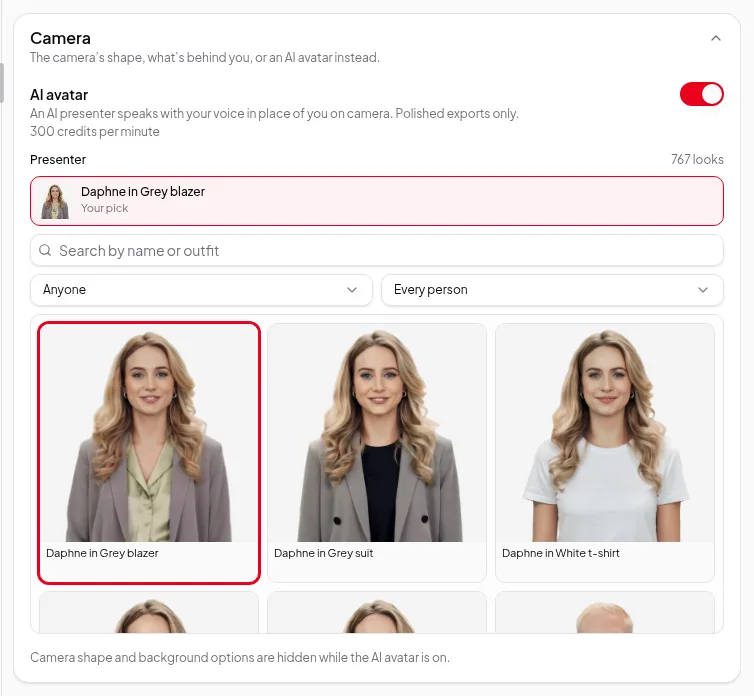
| Presenter looks | Hundreds of stock looks, placed scene by scene | AI avatars, plus personal avatars from a photo or video and an avatar builder |
| An avatar that looks like you | Not offered | Yes |
| Voice cloning | Not offered for summary videos; dubbing speaks in a voice like yours | Yes |
| Languages | Summary videos in 26; recordings dubbed into 29 | 140+ for avatars and voiceovers |
| Dub an existing video | Your edited recordings, with captions in the dubbed language | 130+ languages, from a file or a YouTube link, with voice cloning and lip sync |
| Record your screen | Yes, screen and camera, in the browser | Yes, with a Chrome extension |
| Edit your recording by its transcript | Yes | Yes, for recordings from its AI Screen Recorder |
| Suggested cuts | Filler words, long pauses and retakes, each for you to accept or reject | Filler words and pauses removed automatically |
| Camera views and zooms after recording | Yes | Not described on the pages we checked |
| Clean up noisy sound | Yes, with a strength slider | Not described on the pages we checked |
| Short clips from a long video | Up to 8 suggested clips of 15–90 seconds | Not described on the pages we checked |
| Your own footage in generated videos | Clips from up to 5 of your recordings kept in the cloud, placed in summary videos where they match the narration | Your own uploaded images and videos in scenes |
| Add a video from a YouTube or TikTok link | Your own YouTube, TikTok, X or Facebook videos, or a direct file link; not Instagram or Vimeo | A YouTube link, for dubbing |
| Compilation or highlight videos | Highlights videos: AI-picked sound bites from one recording, linked by narrated bridges or text cards. Compilations: AI-suggested moments from 2 to 10 recordings. You review both before rendering | Not described on the pages we checked |
| Interactive quizzes, branching and SCORM | Not offered | Yes |
| Brand kit | Up to 20 brands, each with a logo, colours and fonts from Vidonto’s set | Brand Kits with logo, colours and fonts |
| Team collaboration | Not offered; your own videos are kept in order with tags, search and bulk actions | Live collaboration and shared workspaces |
| Share the finished video | A watch page with a view count (views use credits); no embeddable player | Share links, embeds and analytics |
| Developer API | Yes, for summary videos, with batches of up to 100 links and signed webhooks | Yes, for video creation, translation, dubbing and interactive avatars |
| Use from an AI assistant | Claude, ChatGPT and other assistants, through a connector | Claude or ChatGPT, through an MCP server |
| Pricing model | Pay-as-you-go credits from $5, no subscription or seats; purchased credits don’t expire | Free plan, and paid plans by the month or year with monthly credits |
Where Vidonto fits better
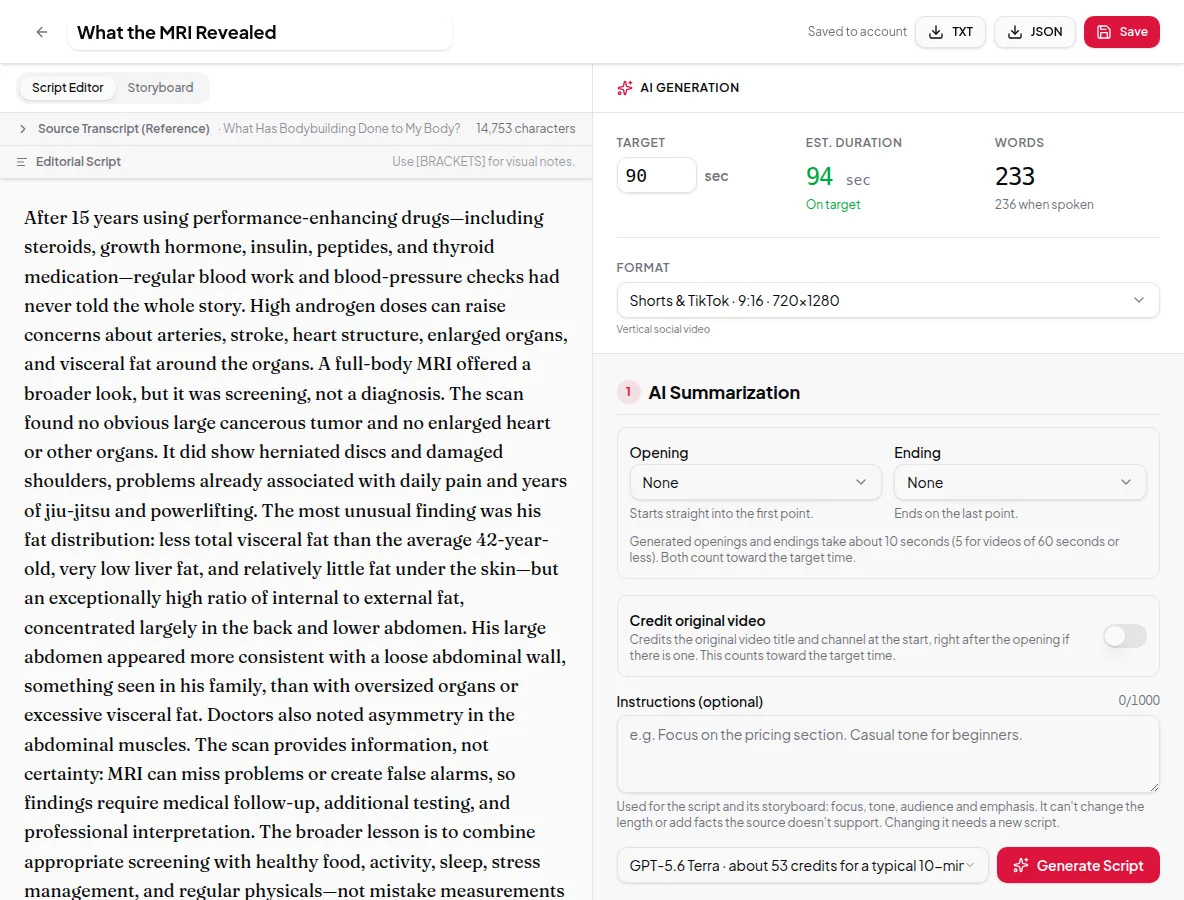
- Summaries of what’s already been said. Paste a web page or a YouTube link, or upload a PDF, Word file or slide deck, and Vidonto writes a script grounded in the source, not in general knowledge. Nothing is narrated until you approve the script, and the storyboard lets you change each frame’s words and layout first.
- Numbers shown properly. When the narration says a figure, a frame can show it as a big key figure or a simple chart instead of a presenter talking over it.
- Your own recordings in the same app. The Video Editor edits a recording by its transcript, suggests cuts for ums and retakes, cleans up the sound and can dub it, all from the same credit balance. Your video stays on your computer; only a small audio track is sent to make the transcript.
- A presenter for your recording, too. The AI avatar speaks with your own voice in place of your camera in polished exports.
- Paying per video. No plan and no monthly credits to use up: you see an estimate before every step and pay only for steps that succeed.
- More from your own recordings. Summary videos can show clips from your own recordings, you can add your videos from a YouTube, TikTok, X or Facebook link, a highlights video links the best moments of one recording with narrated bridges or text cards, and a compilation turns 2 to 10 recordings into one highlight video. Synthesia’s pages describe a YouTube link only as a source for dubbing.
Where Synthesia fits better
- Avatars of you. Synthesia’s pages describe personal avatars made from a photo or a video, an avatar builder and voice cloning. Vidonto’s presenter and avatar use stock looks only, and summary videos have no voice cloning.
- More languages. Synthesia lists 140+ languages for avatars and voiceovers and 130+ for dubbing, with lip sync. Vidonto writes summary videos in 26 languages and dubs recordings into 29.
- Training features. Interactive quizzes, calls to action, branching, SCORM files and viewer analytics are all on Synthesia’s pages. Vidonto has none of these, and its share links have no embeddable player.
- Teams and font upload. Synthesia lists live collaboration and brand kits with fonts. Vidonto has no shared team workspaces, and its brands use fonts picked from Vidonto’s set, with no font upload.
- Real-time avatars and generated footage. Synthesia’s API covers interactive avatars that listen and respond, and its pages describe B-roll from AI video models. Vidonto’s API makes summary videos only, with AI images, charts and animated scenes rather than generated footage. In the app, summary videos can also show clips from your own recordings.
How pricing differs
Synthesia has a free plan that exports with a watermark, and paid plans billed monthly or yearly. Plans include a monthly amount of credits, and higher plans add seats, more features and custom Enterprise terms.
Vidonto has no plans or seats. New accounts get starter credits once their email address is verified, then you buy credit packs as needed. For a summary video, the script, storyboard, voice-over, presenter and render use credits, each shown as an estimate first. See credits explained.
Try the Vidonto workflow
Sources
Synthesia's public pages, read on October 31, 2026:
- www.synthesia.io/
- www.synthesia.io/pricing
- www.synthesia.io/features
- www.synthesia.io/features/ai-screen-recorder
- www.synthesia.io/features/ai-dubbing
- www.synthesia.io/api
- docs.synthesia.io/docs/media
- docs.synthesia.io/docs/video-dubbing
Synthesia is a trademark of its owner. Vidonto isn't affiliated with or endorsed by Synthesia.